
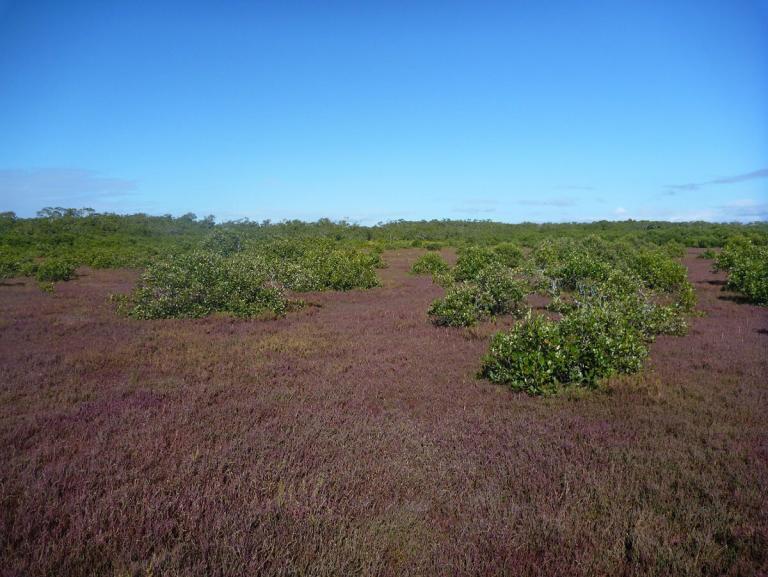
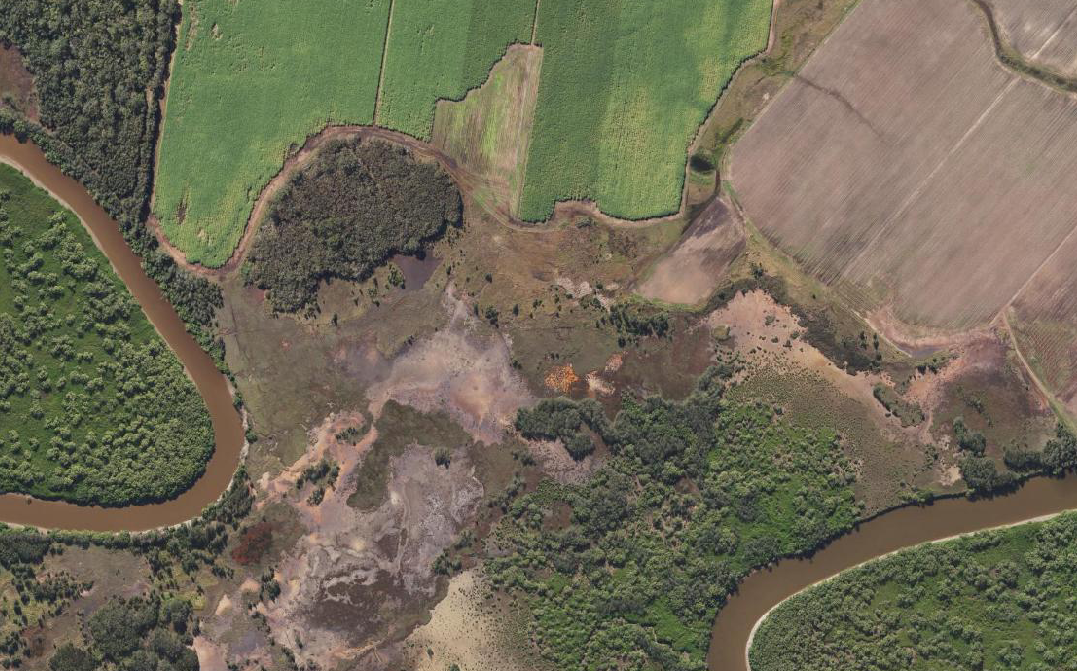
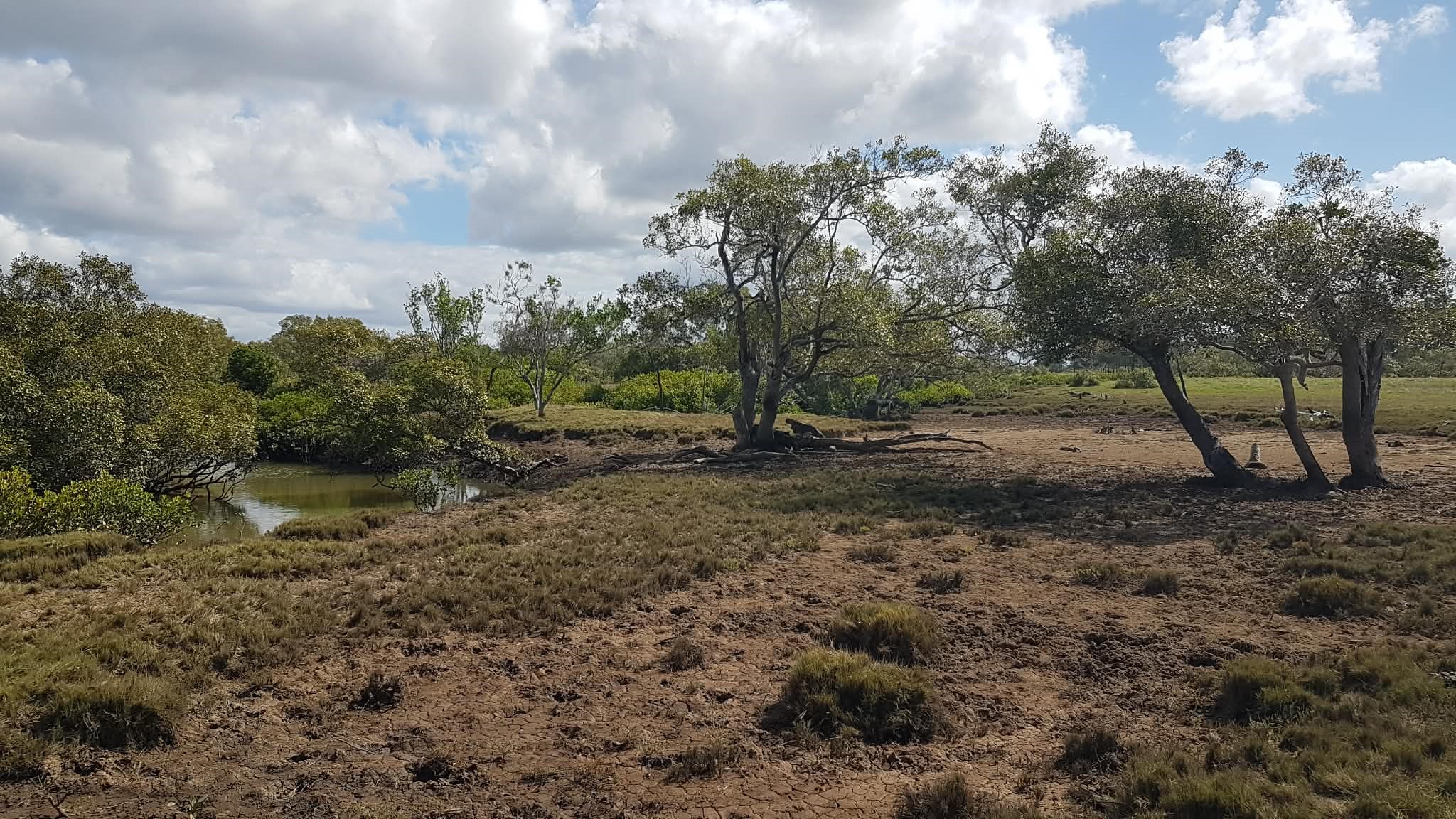
Saltmarsh are intertidal wetland plant communities made up of a mosaic of succulents, grasses, low shrubs and saltpans. They commonly occur in upper intertidal zones between the mangrove fringe and more terrestrial vegetation.
The saltmarsh environment is much more extreme than that of mangroves, with more variable and higher salinities, no shade (hence higher sunlight on the ground and greater exposure to wind) and less frequent tidal incursions, giving rise to periods of very low soil moisture content.
Saltmarshes may be bare or vegetated. Bare saltmarshes are termed “salt flats” or “salt pans” and their existence indicates hypersaline conditions.
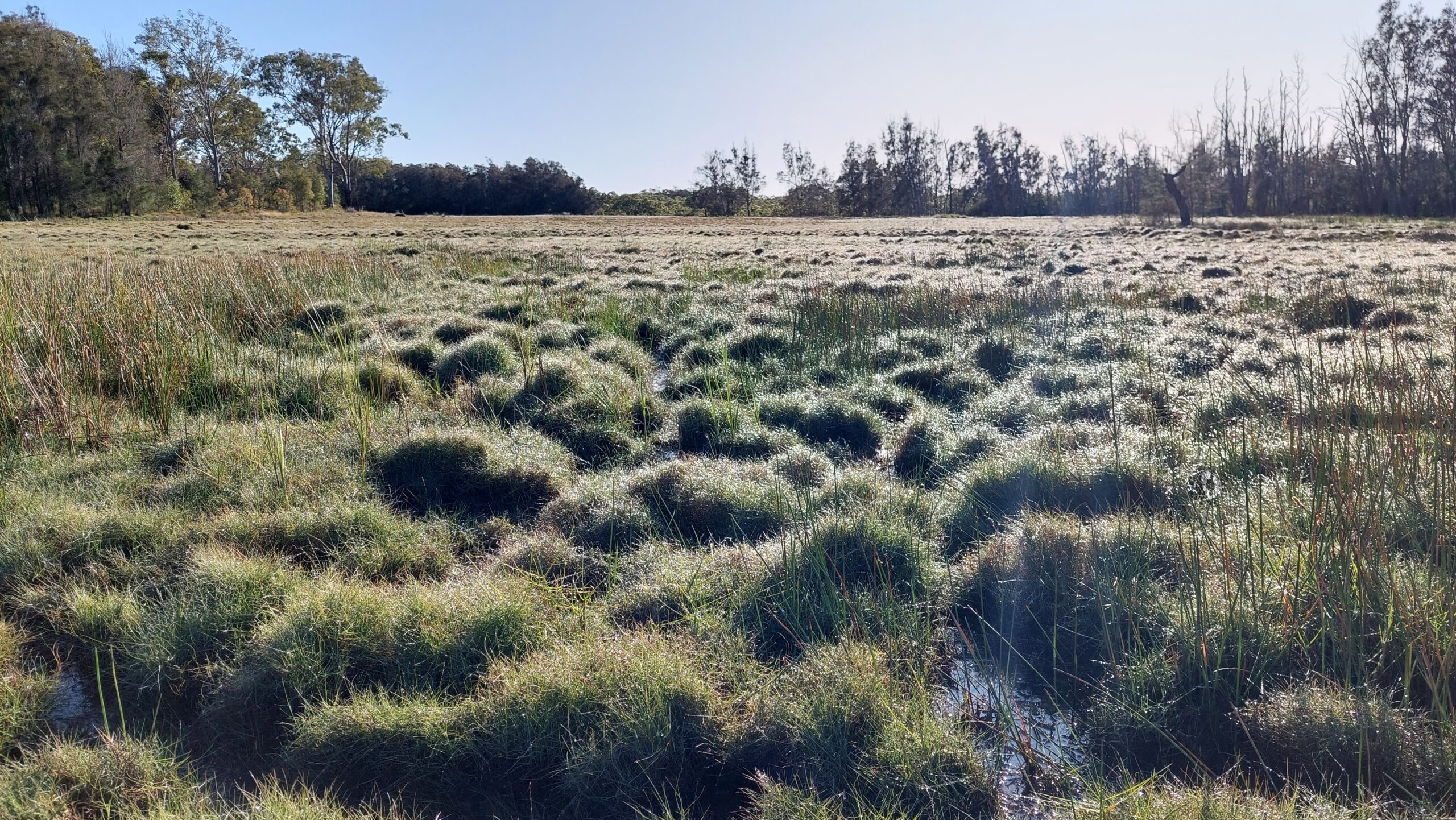
Vegetated saltmarshes fall into two categories: those dominated by sparse to medium density dwarf shrubland of semi-woody plants (samphires) and those dominated by sparse to dense, low tussock grassland.
Saltmarsh is considered a wetland community.
Soil and Geology:
The substrate of saltmarsh is normally deep grey or black clay of marine origin and is low in oxygen.
Relationship with fire:
This vegetation community is naturally fire tolerant when inundated, providing natural firebreaks and a refuge for animals during bushfires. In drought conditions or in wetlands with altered drainage, which has resulted in drier conditions and altered species composition, can increase the risk of more frequent and severe fires. Severe fires can lead to the exposure of acid sulfate soils.
More research is required to better understand the appropriate fire regimes (frequency, intensity, and season of occurrence – if any) is required to protect the ecological values of this community. Fire sensitivity does vary within this vegetation community and degradation of habitat values has been reported post fire.
Fire has been used in Northern Queensland areas to manage exotic pasture grasses like Para grass (Brachiaria mutica) and Hymenachne (Hymenachne amplexicaulis).
Threats:
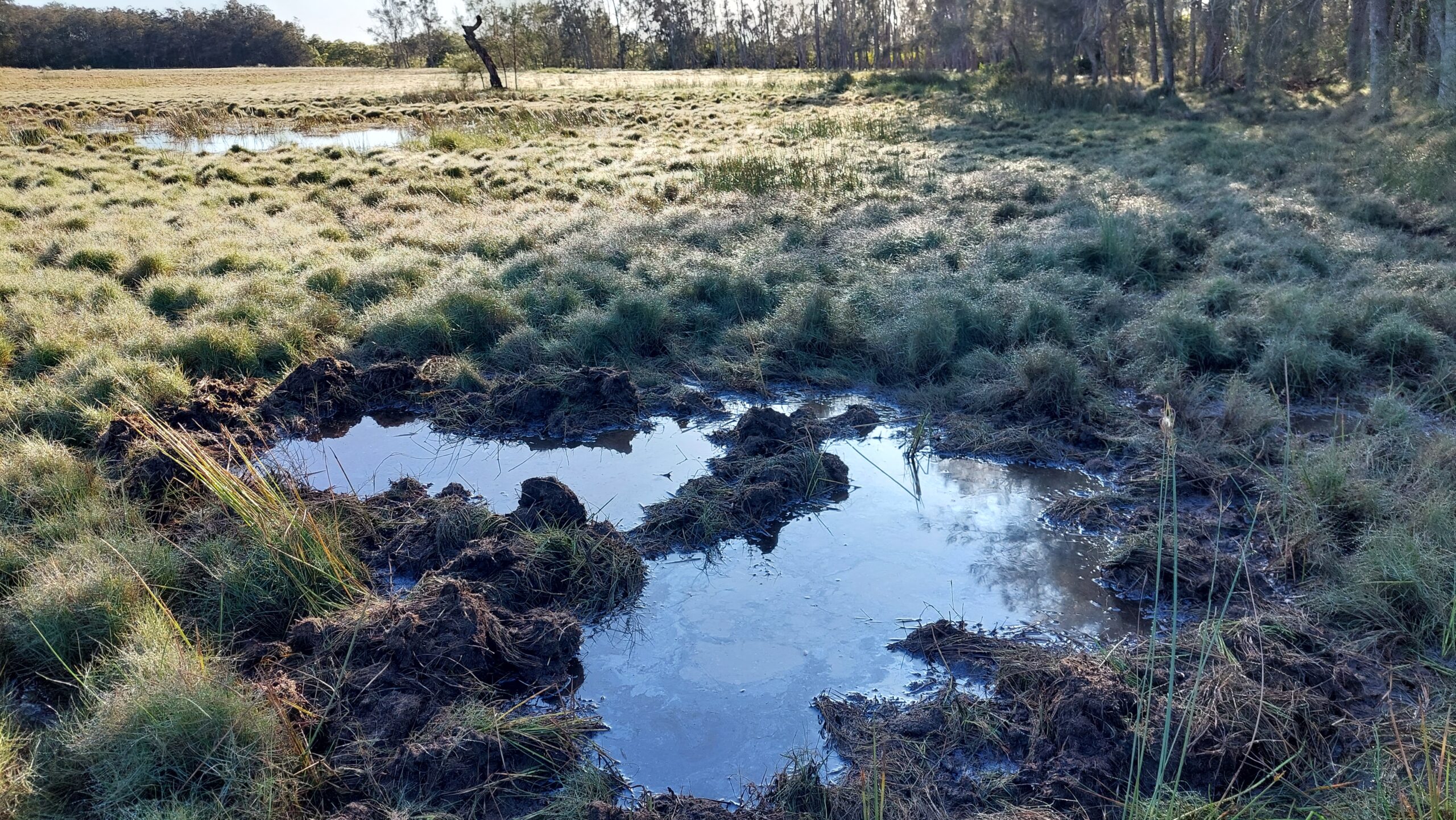
Values:
Management Considerations:
Saltmarsh wetlands mainly fall under the management of local and state government. However, some private ownership does occur, and private land can adjoin saltmarsh wetlands.
Land managers with saltmarsh systems on their property or living adjacent to this vegetation community should take the measures to reduce their impact on this wetland. This may be fencing the area from livestock, creating a buffer between your property and the saltmarsh system (approx. 50-100m), disposing chemicals and wastewater appropriately, and avoid vehicle and foot traffic.
It is often that this wetland may be part of a broader wetland complex e.g. connecting to paperbark woodlands, mangroves and grass-sedge swamps. This needs to be considered when identifying management actions for this vegetation community.
Where degradation or damage to vegetation is evident, landholders are advised to gain expert advice on appropriate remediation options for the site.
Wetland buffers:
A useful tool of protecting wetland biodiversity and ecological values is by maintaining a buffer zone of intact vegetation. Buffer distances range from 50-200 meters.
The buffer is used to reduce the impact from adjacent land uses. Its role is to:
There are specific guidelines for wetland buffer zones under local and state government legislation where development is being undertaken adjacent to the wetland area.
Fisheries Act 1994 and Declared Fish Habitat:
Marine plants in Queensland are protected under the Fisheries Act 1994, which includes the protection of all marine plants, including mangroves, seagrass, salt couch, salt marshes etc. This act also controls activities such as the collection of dead wood and algae for aquariums hobby use. These environments are further categorised as Declared Fish Habitat under the Act acknowledging their vital role in sustaining fish stocks for recreational, commercial, and Indigenous fishing.
This Act is put in place to help protect these valuable marine environments from inappropriate development, such as construction of roads, water crossings, pontoons and jetties etc. Removal or damage of saltmarsh vegetation is illegal without approval. The Fisheries Act 1994 requires land managers to undertake an approval process for development activities, where removal or damage to marine plants will occur. To learn more about this process please visit, here.
We encourage landholders to report sightings of Mangrove and other marine environment damage to the Fishwatch Hotline on 1800 017 116. The Queensland Boating and Fisheries Patrol can issue on-the-spot fines for damage to marine plants and fish habitats. Significant penalties may apply, and serious cases are taken to court.