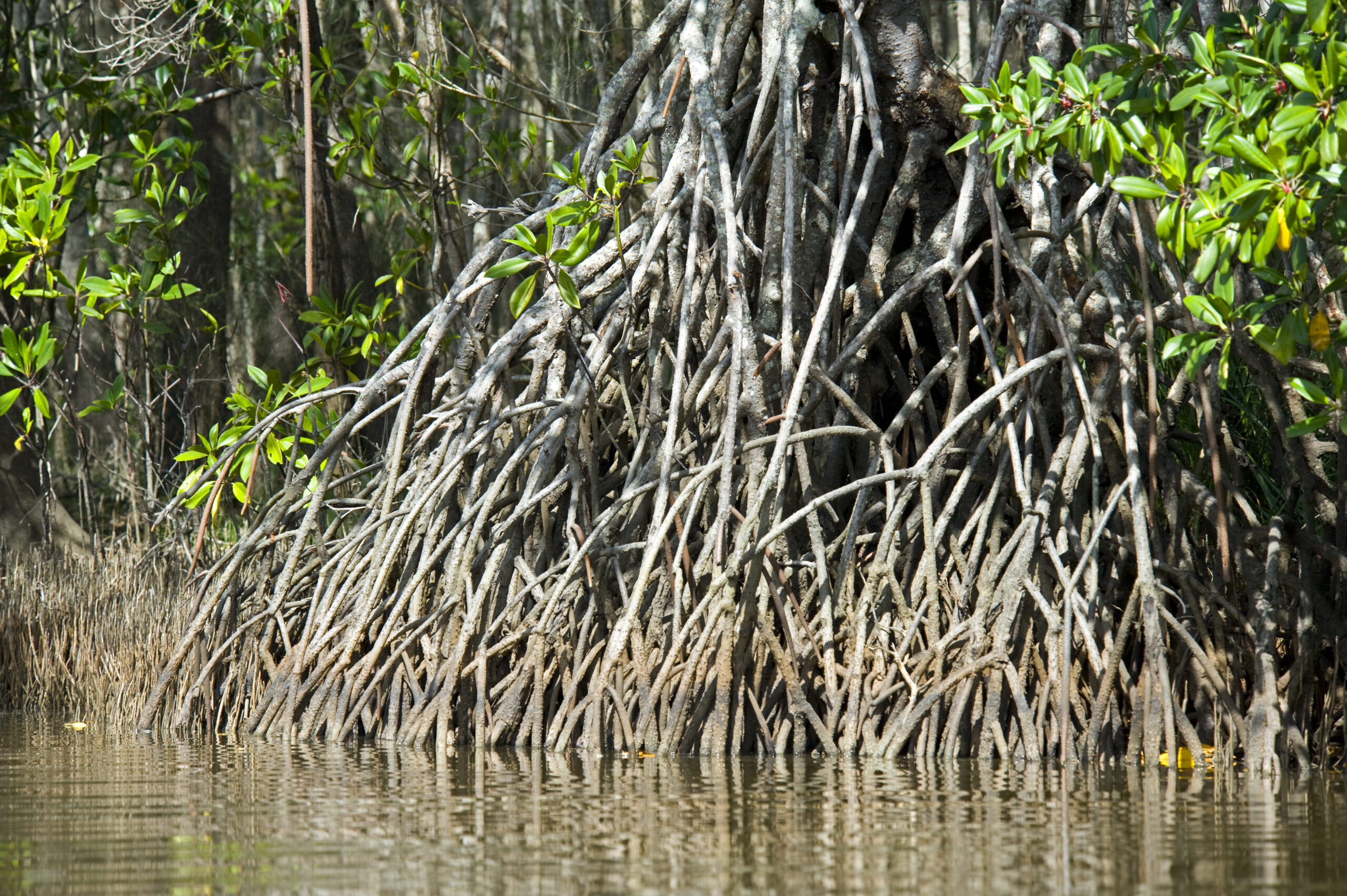
Trees typically form a closed canopy along the intertidal zone of estuarine systems.
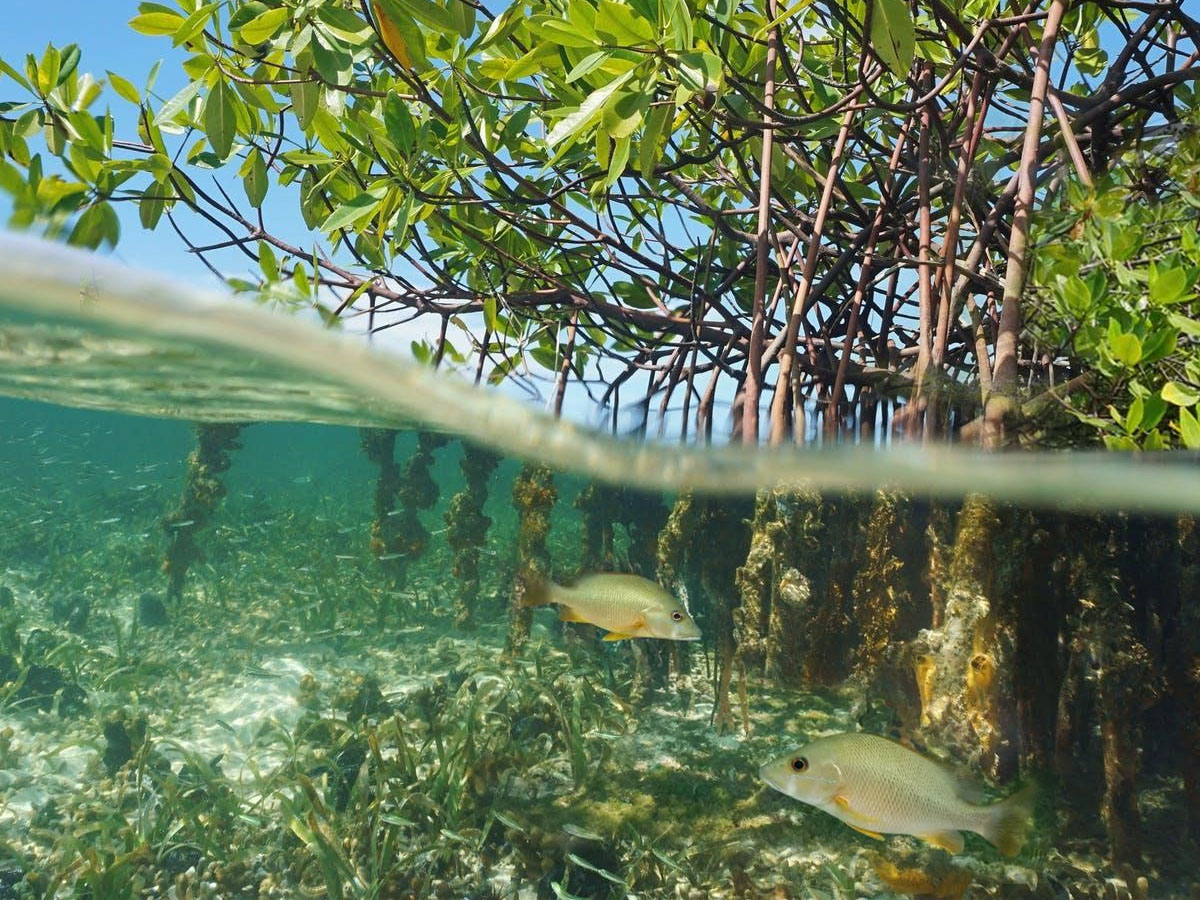
Mangroves have specialised adaptations to survive in frequently inundated anaerobic mudflats including stilt roots and pneumatophores (i.e. aerial roots which resemble fingers or limbs growing upwards from sediments) to increase the diffusion of oxygen into roots.
Other mangrove adaptations include the ability to exclude, accumulate or excrete salt from leaves, the buoyancy of propagules enabling them to disperse long distance in currents, and vivipary, the ability of seeds to germinate before dispersal while still on the tree.
Mangroves are considered a wetland community.
Regional Ecosystems
Regional Ecosystems are a Queensland vegetation community classification system and mapping tool developed by the Queensland Government. It incorporates its regional location, the sites underlying geology, landform and soil and the different vegetation that makes up the ecosystem type. This is a more detailed classification of vegetation communities then the broad vegetation communities outlined in this page.
Regional ecosystems can help you identify suitable species for your revegetation project, help with the planning of fire management, weed management etc., identify the types of fauna habitat and fauna species that may be present on the property and identify which vegetation is regrowth or remnant.
Learn more about Regional Ecosystems – here.
Download your properties Regional Ecosystem map and classification – here.
Regional Ecosystem classification examples for this vegetation community in the Noosa Shire (click to download an RE description or factsheet):
Soil and Geology:
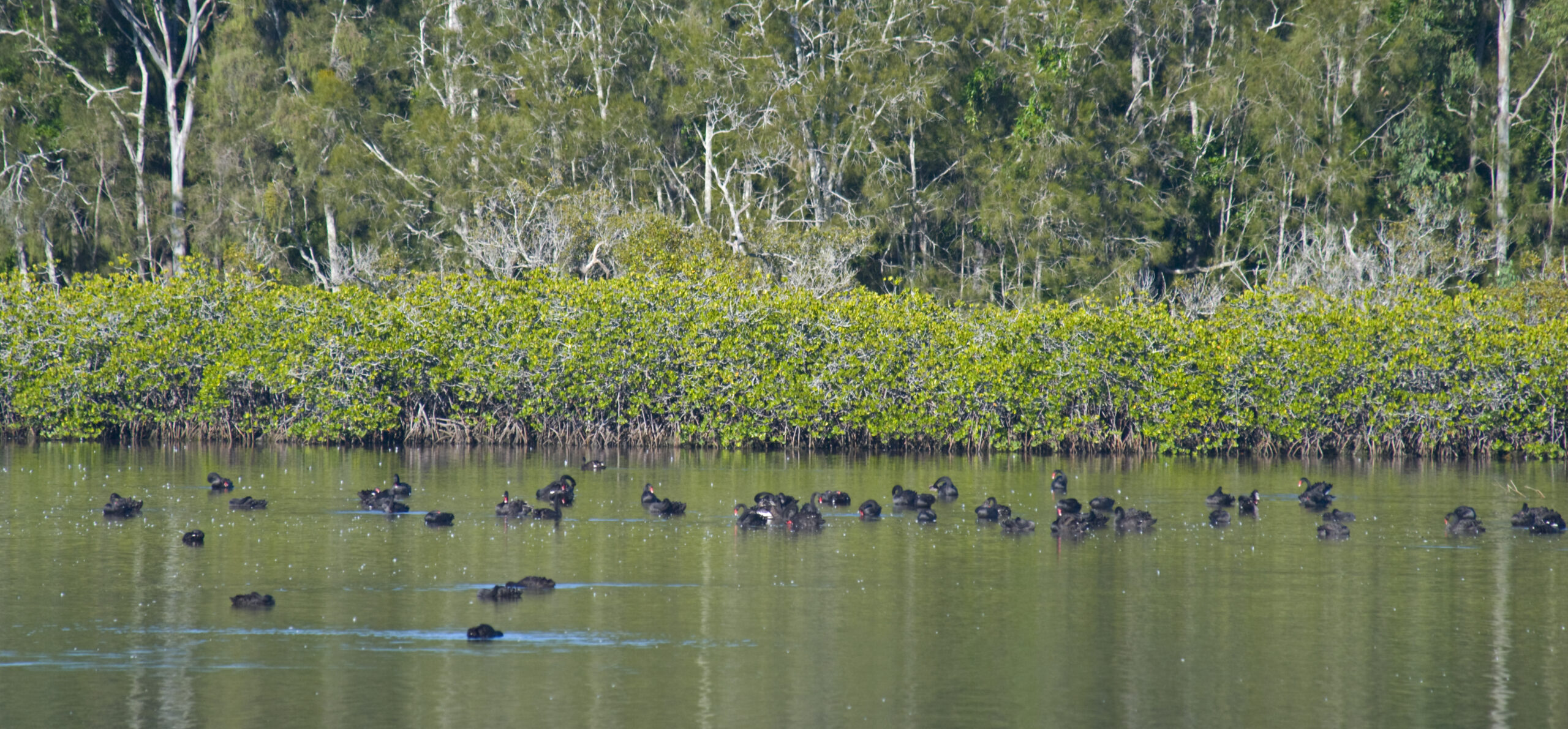
Mangroves grow within low-energy intertidal zones, generally in muddy sediments but also found in sandy and rocky habitats.
Relationship with fire:
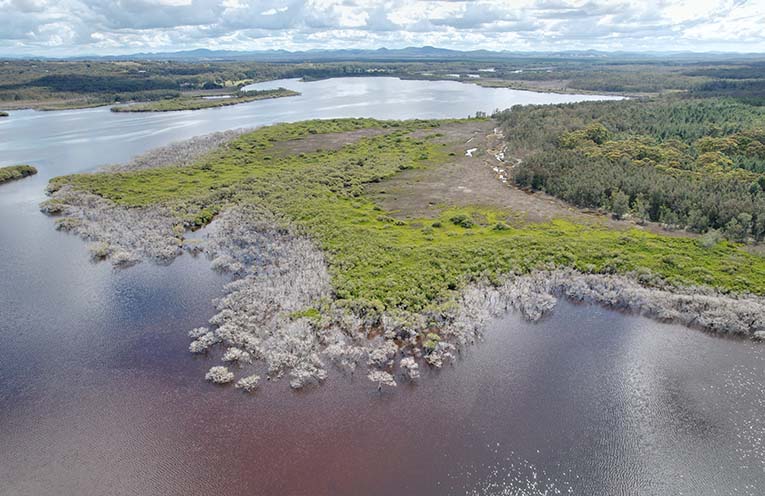
Fire is not required nor beneficial for this vegetation community. Wildfires are a serious threat to mangroves. Depending on the severity of the bushfire, death of trees can occur from the fire itself or the radiant heat.
Threats:
Values:
Management Considerations:
Mangrove wetlands mainly fall under the management of local and state government. However, some private ownership does occur, and private land generally adjoins mangrove wetlands
Land managers with mangrove systems on their property or living adjacent to this vegetation community should take the measures to reduce your impact on this vegetation community. This may be fencing the area from livestock, creating a buffer between your property and the mangrove system (approx. 50-100m), disposing chemicals and wastewater appropriately.
Where degradation or damage to vegetation is evident, landholders are advised to gain advice on appropriate remediation options for the site.
Visitor to these vegetation communities should follow these simple guidelines to ensure these amazing biodiverse environments stay healthy:
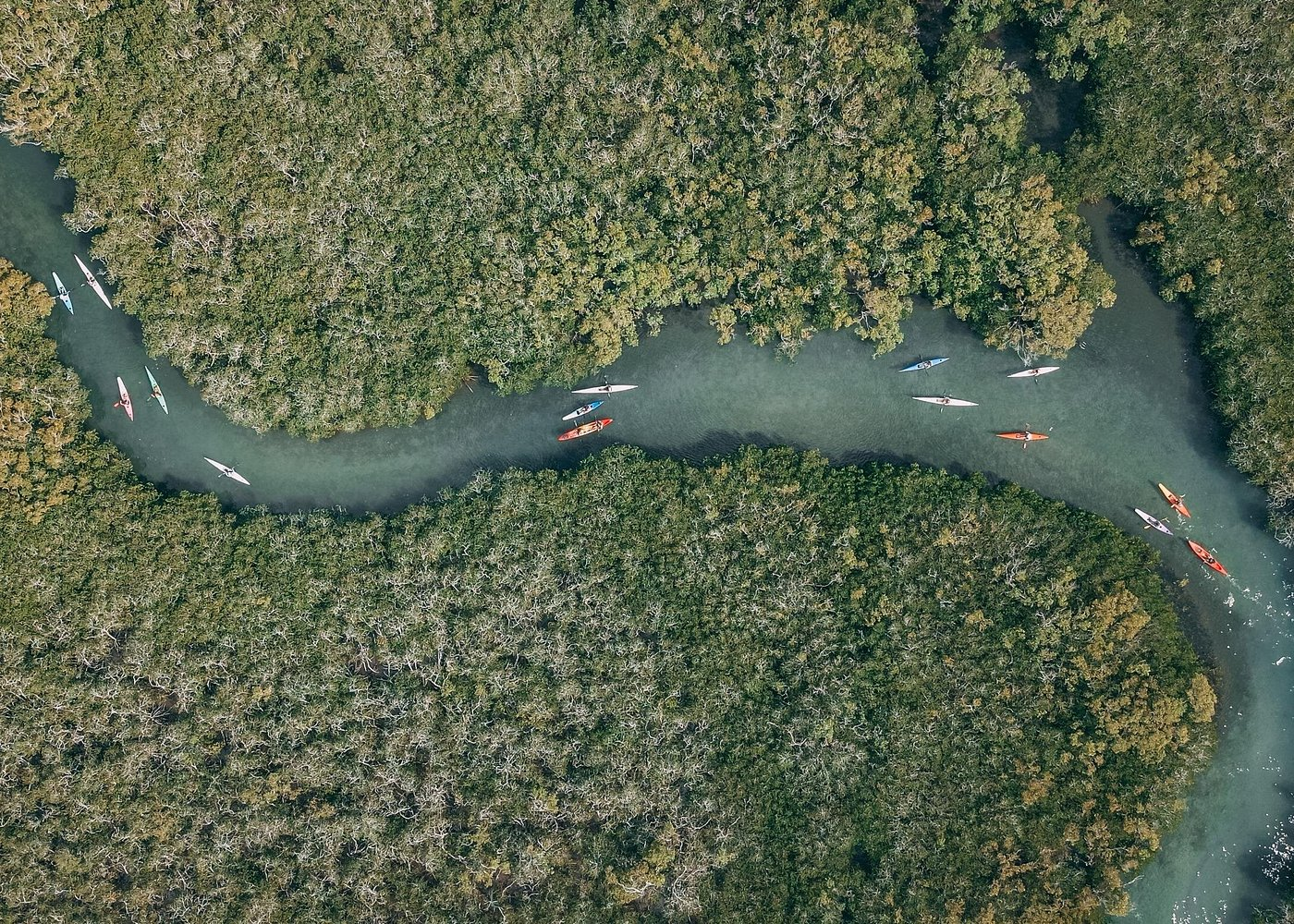
Use boats and kayaks responsibly
Avoid dragging kayaks or canoes over roots or mudflats. Keep boat wakes low near mangrove edges to prevent erosion. Don’t tie vessels to mangrove trunks or branches.
Stick to boardwalks and designated access points
Mangrove soils are soft, waterlogged, and easily compacted. Foot traffic can damage pneumatophores (breathing roots) and reduce oxygen flow to trees. Keep to designated tracks, boardwalks or avoid walking through mangrove areas to minimise your impact.
Prevent pollution
Dispose of fishing line, hooks, bait bags and other rubbish appropriately.
Fishing line and hook entanglement can injure and, in some cases, kill our local wildlife. Properly disposing fishing tackle rubbish will also ensure other visitors can access these environments safely.
Wetland buffers:
A useful tool of protecting wetland biodiversity and ecological values is by maintaining a buffer zone of intact vegetation. Buffer distances range from 50-200 meters.
The buffer is used to reduce the impact from adjacent land uses. Its role is to:
There are specific guidelines for wetland buffer zones under local and state government legislation where development is being undertaken adjacent to the wetland area.
Fisheries Act 1994 and Declared Fish Habitat
Marine plants in Queensland are protected under the Fisheries Act 1994, which includes the protection of all marine plants, including mangroves, seagrass, salt couch, salt marshes etc. This act also controls activities such as the collection of dead wood and algae for aquariums hobby use. These environments are further categorised as Declared Fish Habitat under the Act acknowledging their vital role in sustaining fish stocks for recreational, commercial, and Indigenous fishing.
This Act is put in place to help protect these valuable marine environments from inappropriate development, such as construction of roads, water crossings, pontoons and jetties etc. Removal or damage of mangrove vegetation is illegal without approval. The Fisheries Act 1994 requires land managers to undertake an approval process for development activities where removal or damage to marine plants will occur. To learn more about this process please visit, here.
We encourage landholders to report sightings of Mangrove and other marine environment damage to the Fishwatch Hotline on 1800 017 116. The Queensland Boating and Fisheries Patrol can issue on-the-spot fines for damage to marine plants and fish habitats. Significant penalties may apply, and serious cases are taken to court.