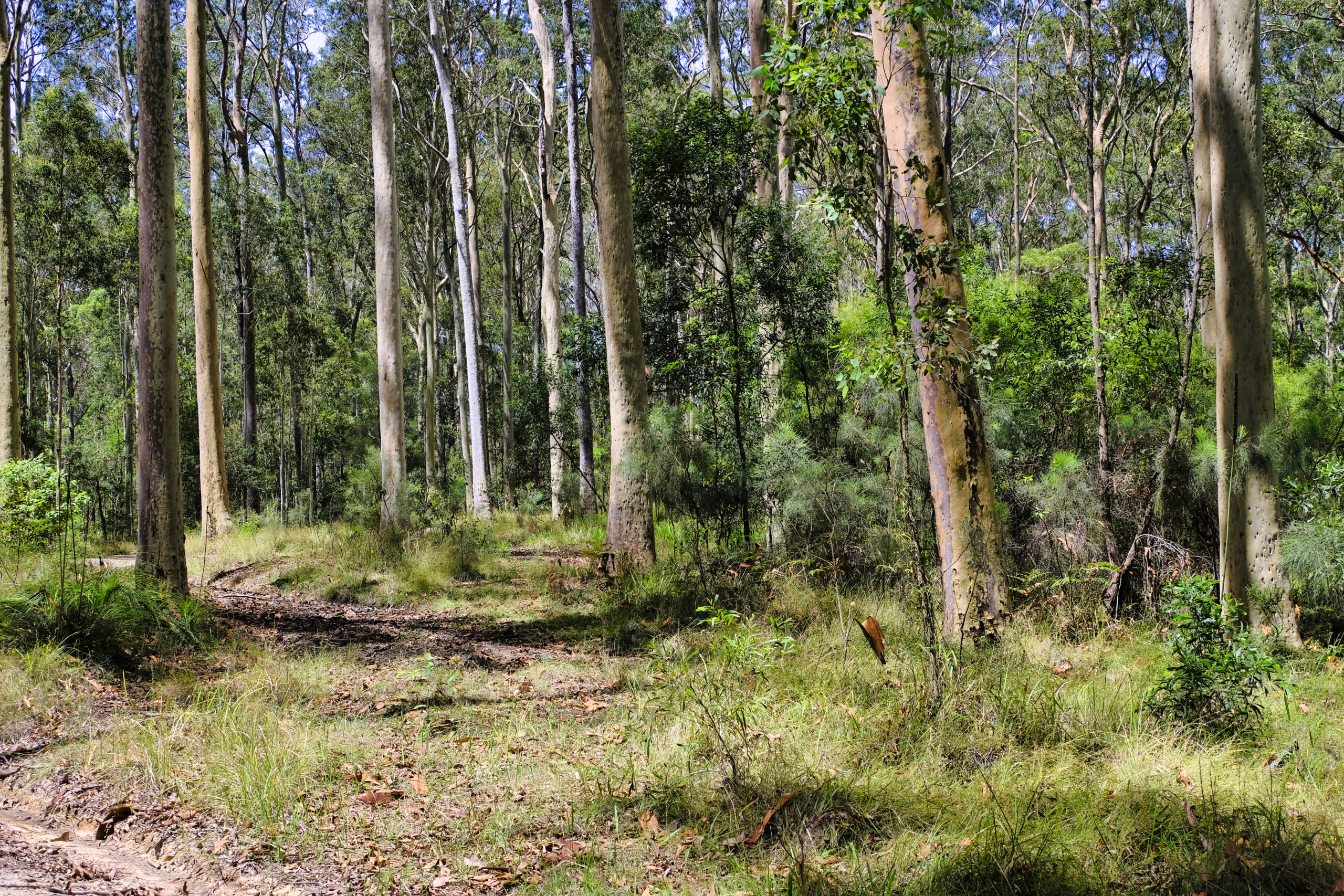
Regional Ecosystems are a Queensland vegetation community classification system and mapping tool that incorporates its regional location, the sites underlying geology, landform and soil and the different vegetation that makes up the ecosystem type.
The classification of vegetation communities as regional ecosystems recognises the interaction between geology, landform, soils and vegetation patterns and hence, the way the landscape is broadly functioning. This is a more detailed classification of vegetation communities then the broad vegetation communities we outline in our ‘Vegetation Communities of the Noosa Shire‘ section of the landholder guide.
Regional Ecosystems are still a broadscale classification, so some variances do occur on-ground, particularly where an ecosystem type has recovered or is recovering from some form of disturbance e.g. clearing, severe fire, weeds etc.
Resources:
Regional Ecosystems (REs) are denotated as a code of numbers. The first number refers to bioregion (region in Queensland), the second number refers to the land zone (geology/landform/soil), and the third number refers to the dominant vegetation.
Example Regional Ecosystem – RE12.3.1
12 = Southeast Queensland bioregion.
3 = Alluvium, river and creek flats land zone.
1 = Gallery rainforest. Complex to simple notophyll vine forest.
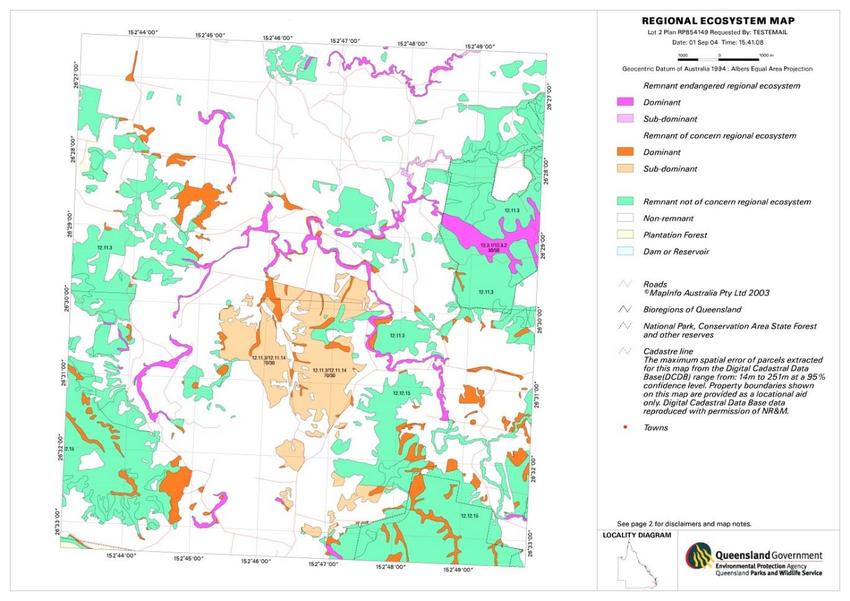
The Queensland Government provides data on the likely Regional Ecosystem distribution pre-clearing (i.e. expected distribution pre-colonisation) and current distribution of remnant vegetation.
Regrowth vegetation is not mapped or classified as it is not possible to broadly map this type of vegetation. Regrowth is likely to hold significant variation across the landscape and over time, even with the same land zone and bioregion. We can investigate the pre-clearing Regional Ecosystem for regrowth to better understand what vegetation community is likely recovering at the site and what species we could use to support its recovery.
Where significant modifications have occurred at the site which has changed the original soil and water characteristics this may translate to significantly altered vegetation communities to what were originally onsite pre-clearing/modification.
Each Regional Ecosystem has a profile known as regional ecosystem description providing a summary of the ecosystem classification, this includes dominate plant species, vegetation structure and the conservation status (Endangered, Vulnerable, Near Threatened) of the community.
What can we use Regional Ecosystems for?
Remnant vs Regrowth vs Old Growth
Remnant: The official definition prescribed by the Queensland Government is ‘uncleared native vegetation or regrowth native vegetation that, with appropriate management, could achieve the structure and composition of the original native vegetation community over at least two decades.’
Regrowth: The official definition prescribed by the Queensland Government is ‘vegetation that is not remnant vegetation’. How we see this in practice is, vegetation that has been cleared in the past 50 years or more that consists of vegetation that represents an earlier stage of vegetation succession or altered vegetation community to what may have been previously growing on site pre-clearing.
Old growth: An unofficial term to describe uncleared native vegetation, that likely resembles the original native vegetation community at the site prior to European colonisation.