
Managing weeds on your property
The best way of managing weeds is first to prevent them from being established.
Weed establishment can be reduced by:
Having identified weeds on your property, creating a management plan is an effective way to manage resources and achieve positive outcomes for priority areas on your property.
We recommend reading this great comprehensive resource on developing a weed management plan:
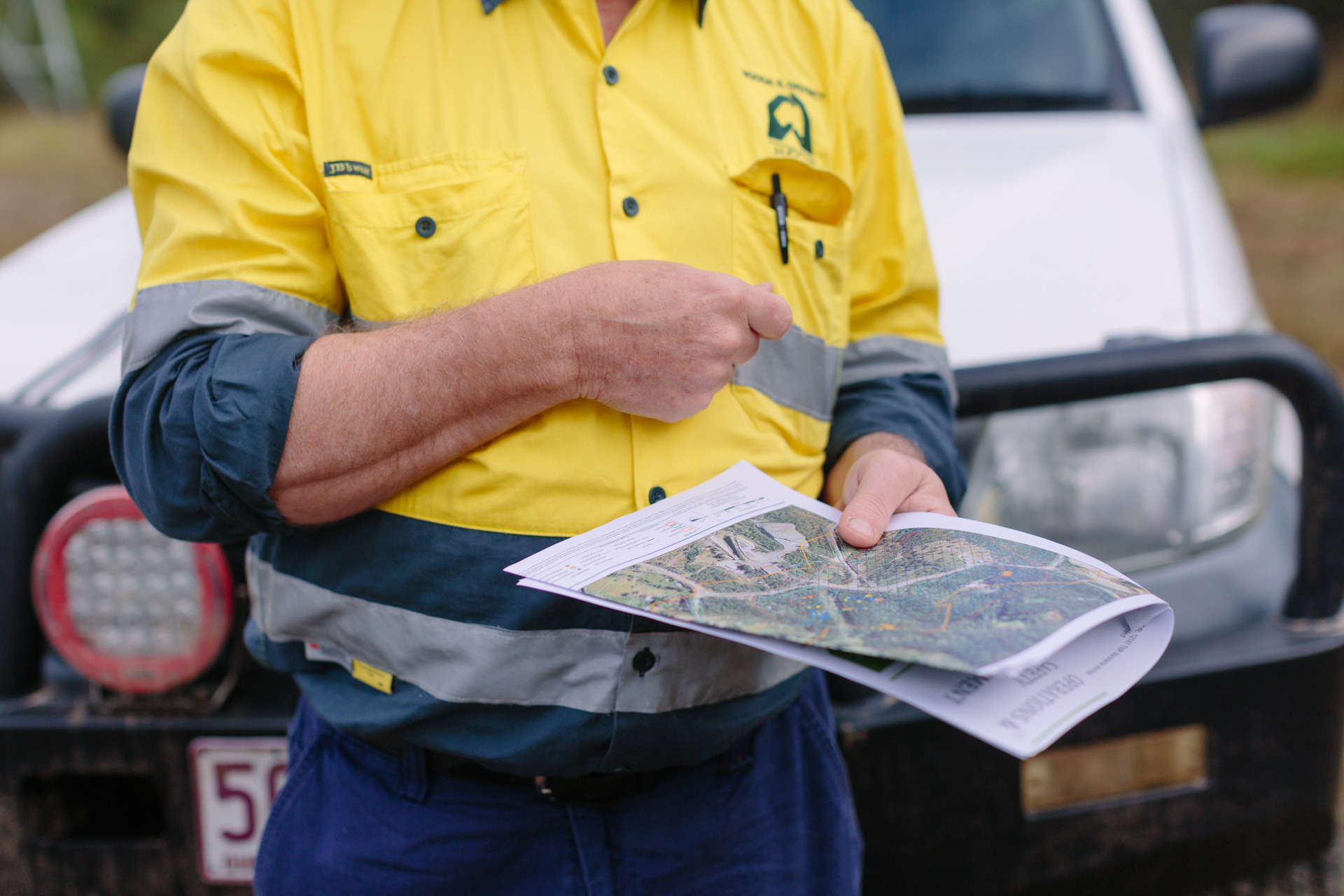
A weed management plan sets you up for stronger, more effective weed control on your block.
Creating a basic map depicting treatment areas, site access, and other site information is a great tool in planning weed treatment on your block and monitor impact of your weed management plan.
Integrated weed management
Integrated Weed Management (IWM) is a holistic approach that combines multiple control methods—such as manual removal, herbicides, biological control, revegetation, and good land management—to reduce weed impacts in a sustainable way.
Instead of relying on a single technique, IWM focuses on using the right mix of tools to prevent weeds from establishing, reduce their spread, and support the long‑term health of the landscape.
Watch this great short clip on using IWM for managing weeds on your block and improve biodiversity and resiliency in our local bushland areas.
Species invasion curve
The species invasion curve depicts the benefits of preventing an invasive species from establishing or eradicating it before it becomes widespread. As you move across time without treatment of a weed species, the opportunity to eradicate the weed becomes unlikely, while the area of infestation increases, and the investment of time and cost rapidly grows.
“Early detection and rapid response” Wise words of weed guru of Noosa Landcare, Phil Moran.
Management approaches to consider
Bradely method
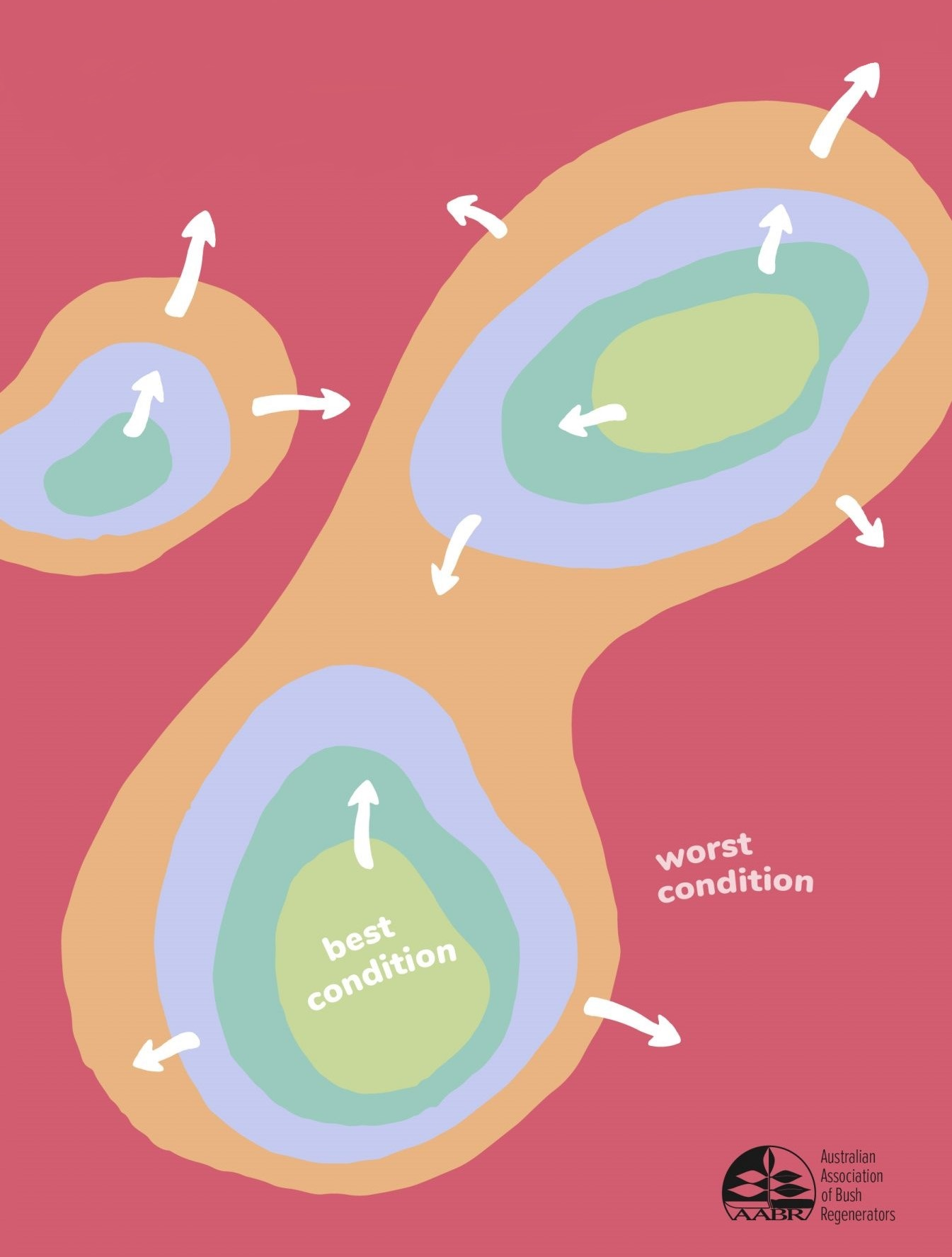
In the 1960s and 1970s Joan and Eileen Bradley developed a series of weed control and native vegetation recovery techniques through trial and error. Later coined the ‘Bradley method’ it involves methodically treating weeds in and around healthy native vegetation so that each area is re-colonised by the regeneration of native plants, replacing the weeds.
The method places great emphasis on rigorous and timely weed control follow-up during the recovery phase. Joan and Eileen demonstrated that once native vegetation was re-established within the managed bushland areas, weed control was needed infrequently, mainly in vulnerable spots such as creek banks and bushland edges.
The Bradley method follows three main principles:
- 1
Secure the best areas first. They are the easiest to work with the best results. They are the core areas that can then be expanded.
- 2
Minimise disturbance to the natural conditions (e.g. minimise soil disturbance and off-target damage).
- 3
Don’t over clear – let the regeneration of the bush set the pace of clearance.
Target weeding
A general principle of ecological restoration is to comprehensively and systematically control all weeds. This systematic approach reduces the risk of weed recolonisation, potentially by a more invasive or difficult to control weed. However, in some circumstances it may be necessary to undertake targeted weed control, i.e. concentrate on one weed species.
Examples of circumstances where target weeding may be suitable in your context:
Avoiding damage to native plants
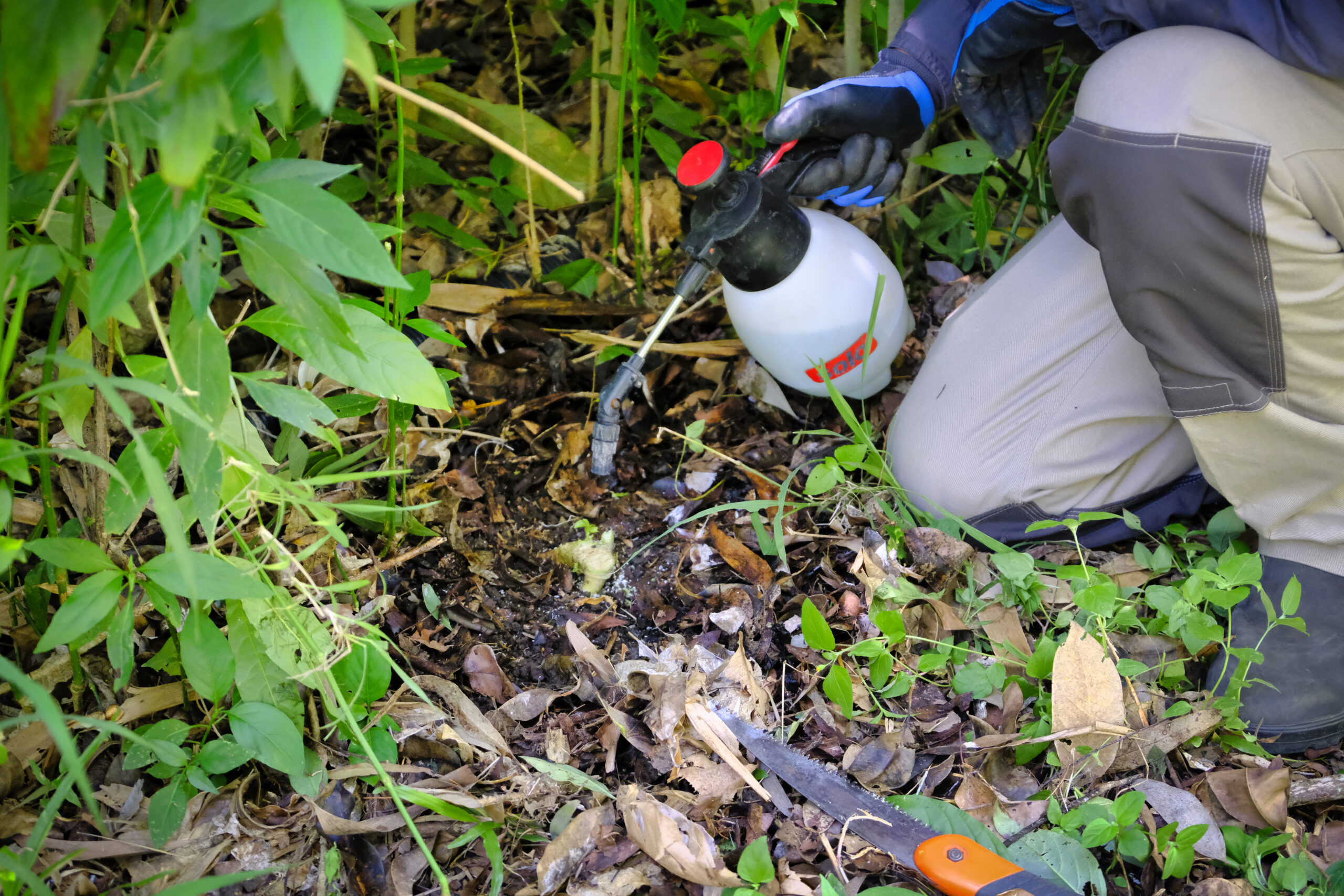
During weed control work, it is possible for off-target damage (i.e. damage or death) to native plants to occur without careful management. For example, while spot-spraying weeds, it may be difficult to avoid herbicide affecting native seedlings covered or adjacent to the weed.
To avoid off-target damage to native plants, the site should be prepared prior to spraying, mechanical and manual removal techniques by pulling back the weeds around the native seedlings, trees, shrubs, tussock grasses and sedges where feasible.
The right selection of herbicide can also avoid damage to native seedlings, e.g. avoid herbicides that are residual in the soil. Other precautions include, use of marker dye and correct spray nozzle, only spraying in calm dry weather and having good plant identification skills.
Keep an eye on it!
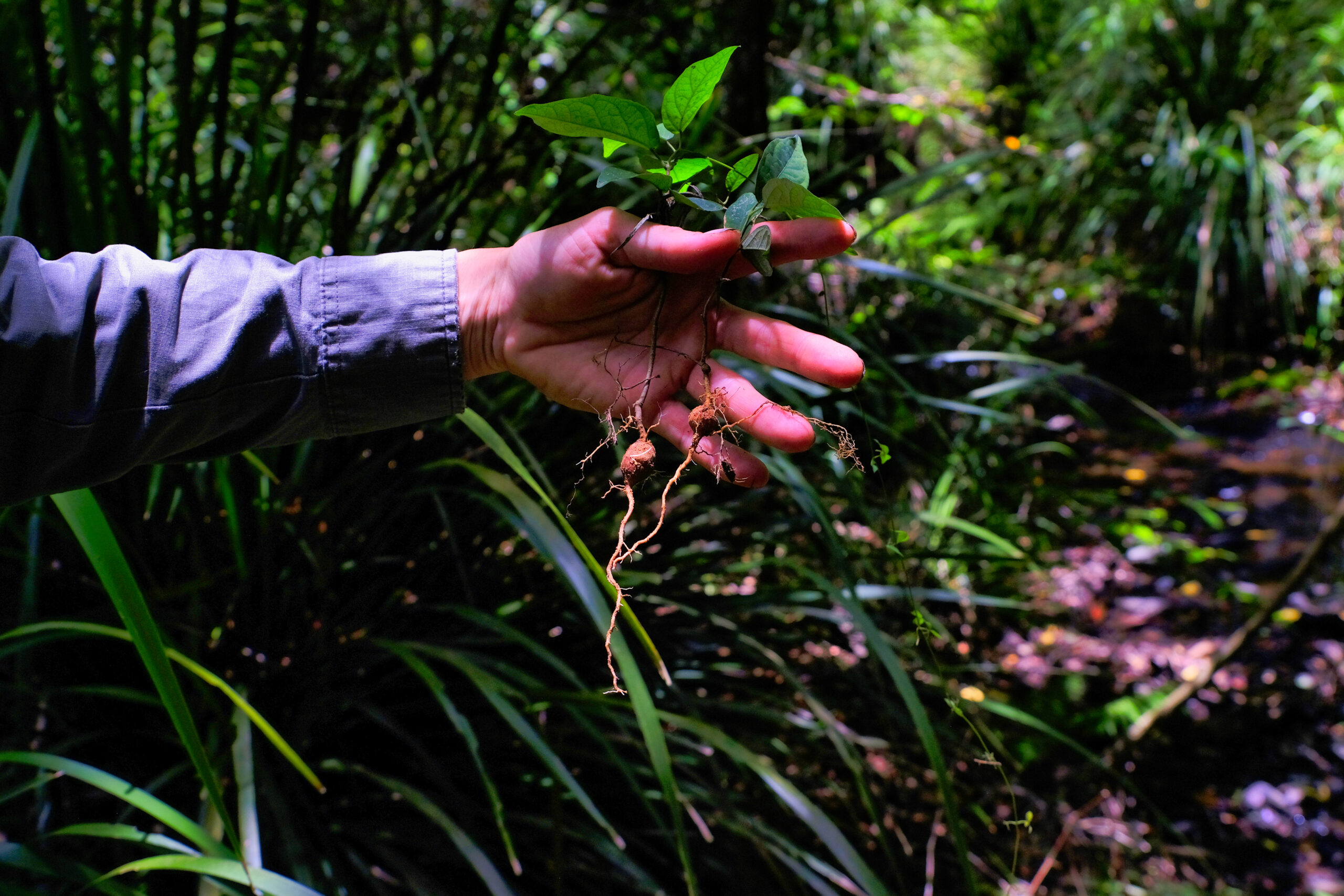
Monitor treated sites regularly to ensure long-term success of your weed management plan. On-going monitoring will identify areas where follow-up weed treatment may be required.
Follow-up treatment generally can involve spot-spraying or hand weeding newly germinating weeds and cut and swab or stem scrape of resprouting sections of woody weeds and vines previously treated.
A site that receives poorly timed follow-up will rapidly experience setbacks, as weed propagules will quickly become established in the newly disturbed areas.
Weed control methods
Selecting the appropriate control method is important to achieve good weed management outcomes and optimise use of time and money. There are several commonly used methods for environmental weed control.
These include a range of non-chemical weed control options to consider.
Manual/hand removal
This method aims to remove the entire weed including its roots from the soil by hand pulling.
Pros:
- Herbicide free treatment.
- It can be targeted to specific plants.
- Immediate visual results.
Cons:
- Labour intensive and time-consuming.
- May disturb soil and promote erosion if not managed carefully.
- May not be suitable for all weed species.
- May require significant follow-up control
Chemical control
This is the use of herbicides to destroy or inhibit the growth of plants. There are multiple application methods to use.
Pros:
- Cost effective for large areas.
- Targeted control when using selective herbicides.
- Versatile application methods.
Cons:
- Environmental risk if not applied correctly and safely.
- Human health risk if not used correctly and safely.
- Not suitable for in or nearby waterways.
Cultural control
This involves modifying land management practices to create conditions that discourage weed growth. These methods are often preventive and work best when integrated into long-term restoration or agricultural strategies. For example, establishing dense diverse pasture cover to outcompete weeds for light, nutrients, and space.
Pros:
- Herbicide free treatment.
- Promotes long-term weed control
Cons:
- Can be expensive depending on method used.
- Can be labour intensive and time-consuming.
- May not be suitable for all weed species
Mechanical
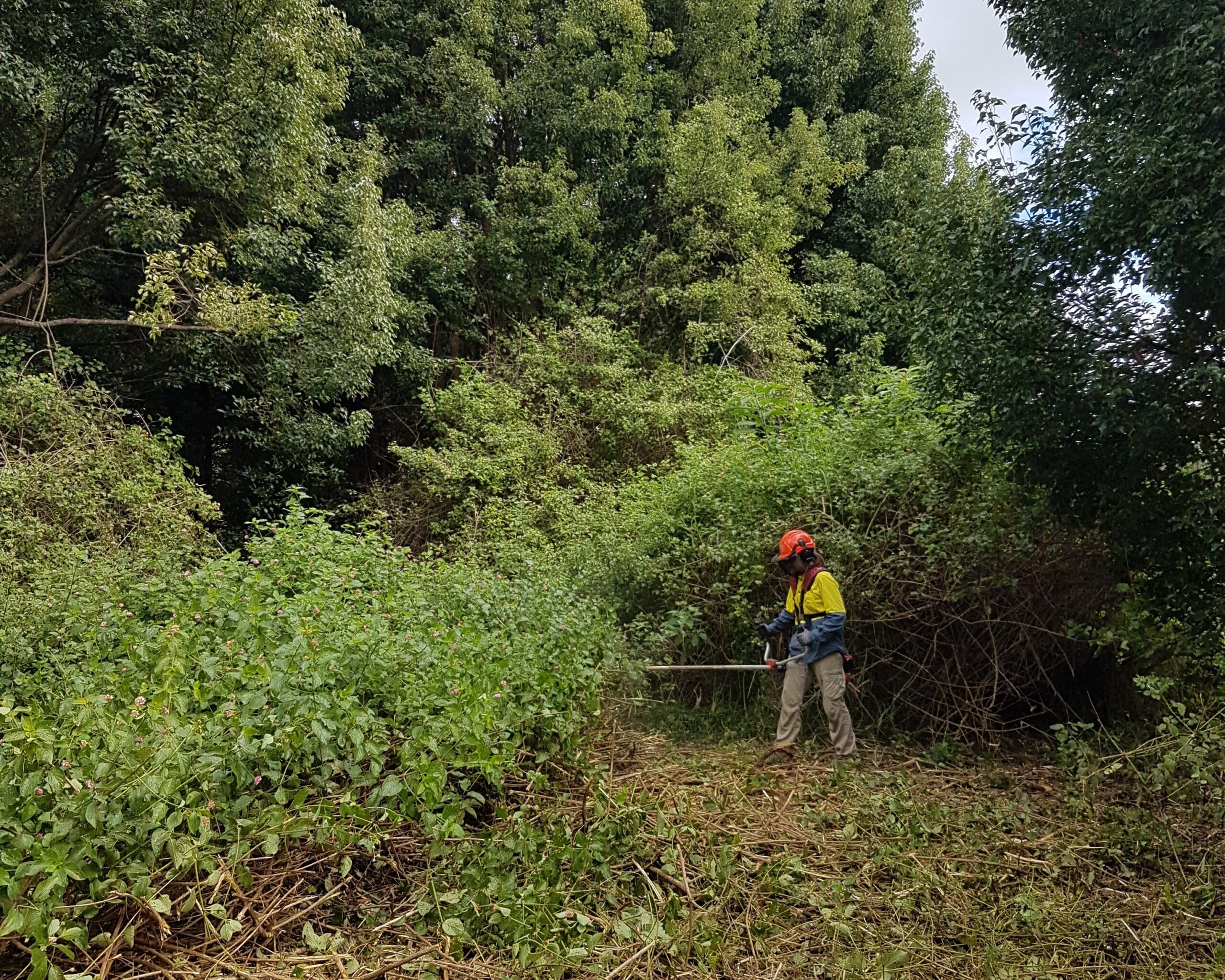
This method aims to remove the entire weed or suppress its growth using machinery and tools. This can include mowing, brushcutting and slashing, the use of mattocks, rakes, tree poppers and other digging tools.
Pros:
- Herbicide free treatment.
- It can be targeted to specific plants.
- Immediate visual results.
Cons:
- Labour intensive and time-consuming.
- It can be expensive depending on method used.
- May disturb soil and promote erosion if not managed carefully.
- May not be suitable for all weed species.
- May require significant follow-up control.
Biological control
This is a method that uses a living organism to control weed species. This may be a predator, parasitoid or pathogen to the plant.
Pros:
- Low labour input.
- Herbicide free treatment.
- Good for inaccessible areas.
- Useful in sensitive aquatic areas.
Cons:
- Not available for many weeds.
- Does not eradicate weeds – rather used in combination with other management strategies.
- Success depends on perpetuation and survival of the biocontrol agents.
- May not be accessible, require local investment to establish breeding facilities.
Resources:
Information in this section has been adapted from a Southeast Queensland Land for Wildlife article
Safe herbicide use for better biodiversity and ecological outcomes
While herbicides can be highly effective in controlling invasive weeds, their application in natural area restoration should emphasize safety, accuracy, and ecological responsibility.
Key considerations for safe herbicide use include:
1. Is there an alternative method?
Can the weeds be treated effectively and practically with an alternative weed control method?
Visit ‘Weed control methods’ section above to see what options you have.
Take time to understand the weed you are working with to know what the most effective method may be. Check out the Queensland Government Invasive plants factsheets available online to get a deeper understanding on the weed you are looking to manage.
2. Match Herbicide to Weed Species
Identify the most appropriate herbicide to treat your target weed.
Check out the Queensland Government Invasive plants factsheets to help you select the best herbicide. Alternatively, you can contact the Noosa Landcare office to get advice on herbicide selection.
It is important that you read herbicide labels and use only the registered rates.
3. Apply at the right time
Treat weeds when they are actively growing for maximum effectiveness.
Long-term, repeated use of herbicides within a single area can have a negative impact on soil and plant health, consider using herbicides in conjunction with other control method options as part of an integrated management approach and minimises long-term use of herbicides.
4. Use the right equipment.
Proper equipment allows for accurate delivery of herbicide to the target weed, reducing exposure to non-target plants and sensitive habitats.
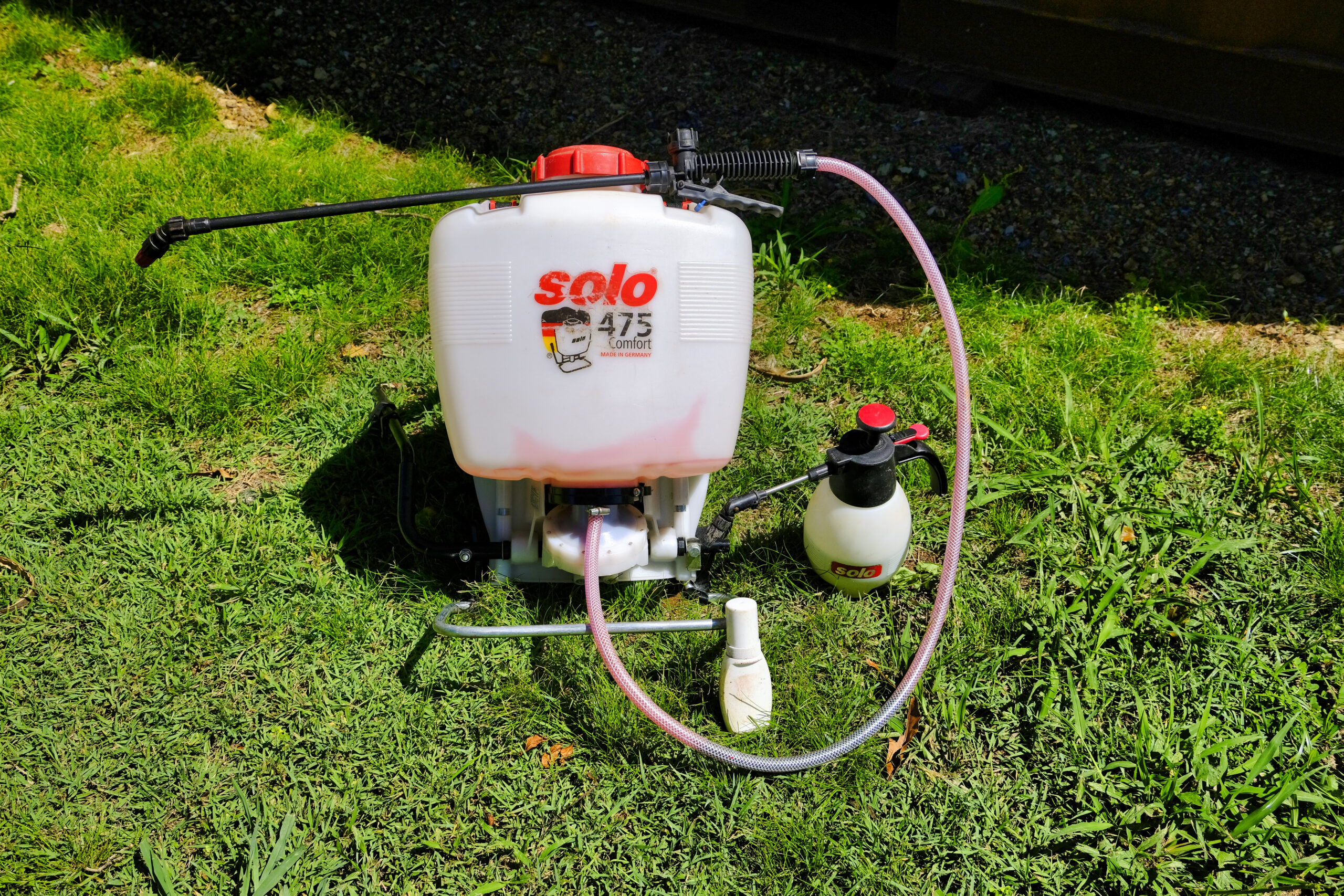
Use equipment designed for low-pressure or directed application e.g. dabber applicators, backpack sprayers or handheld sprayers.
5. Use appropriate application methods.
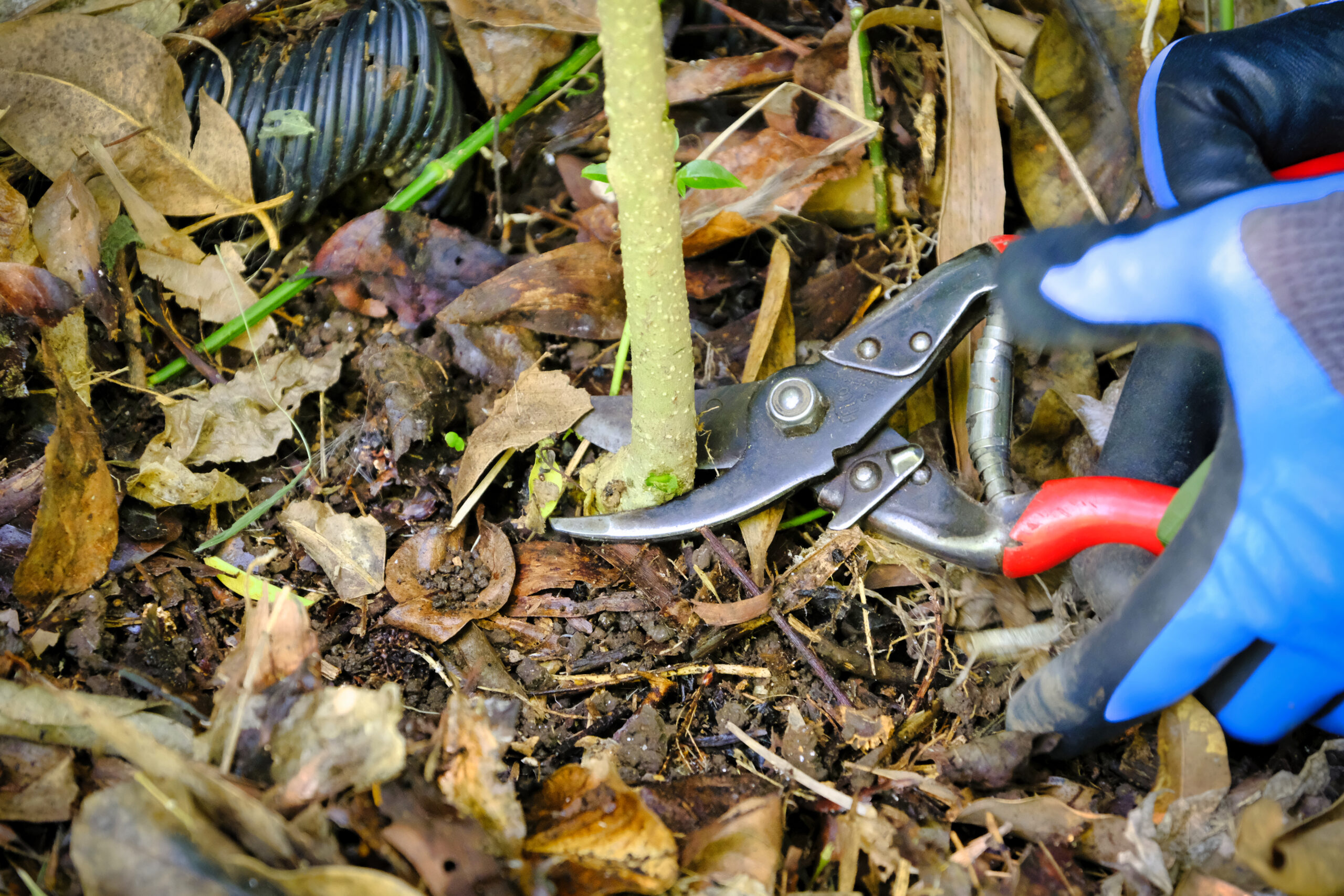
Prefer cut-stump, stem injection, or frilling methods over foliar spraying to reduce amount of herbicide applied and the risk of run-off or off target spraying.
7. Keep a buffer around waterways.
Avoid foliar spraying adjacent to waterways.
8. Organic herbicides are still chemicals
Please take the same safety and environmental precautions when using ‘organic’ or ‘natural’ herbicides.
Keeping yourself safe
It is important that you consider your health and safety when handling herbicides.
Is there an alternative method?
Can the weeds be treated effectively and practically with an alternative weed control method?
Visit ‘Weed control methods’ section to see what options you have. Take time to understand the weed you are working with to know what the most effective method may be.
Read and Follow the Label.
Always read the product label and Safety Data Sheet (SDS) before use.
Follow instructions for mixing, application, storage, and disposal.
Use in the right conditions.
Use herbicide in the right conditions. Do not spray in windy conditions to prevent drift onto skin or eyes.
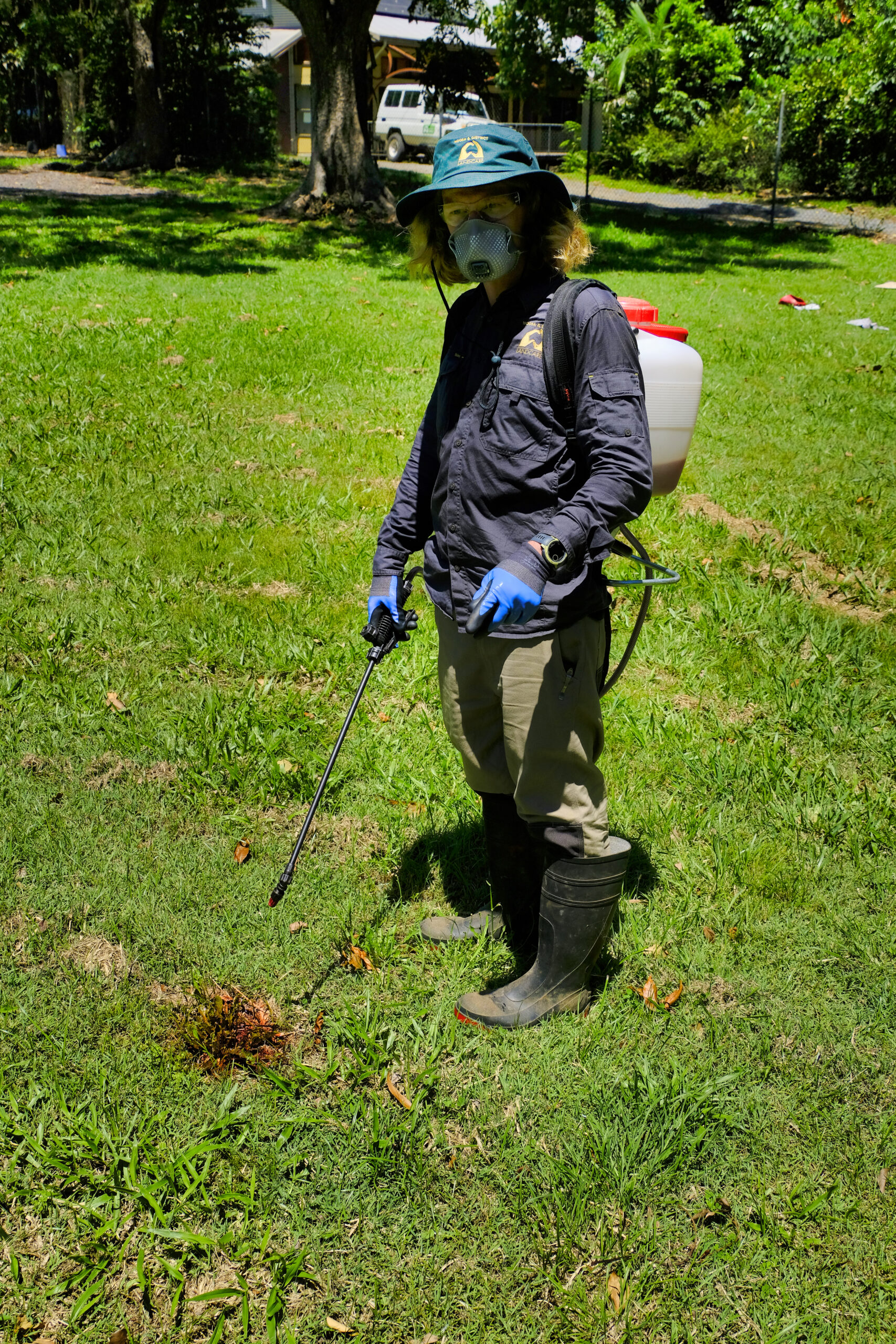
Wear Personal Protective Equipment (PPE) when mixing and applying herbicide.
Read the product label for more information for the advised PPE for your specific herbicide.
Minimum recommended PPE includes:
- Gloves (chemical-resistant)
- Long sleeves and pants
- Safety goggles or face shield
- Respirator or mask
- Closed footwear
Check out this informative clip sharing Sunshine Coast Council's 4 simple steps to weed management for a demonstration site at Witta.