February is here – and so is the army of Frog Finders!
Now is the perfect time to get involved in the Mary River Catchment Coordination Committee Find a Frog in February.
Frogs are incredibly easy to love. With their permanent smile, gentle nature and quirky habits, they’re both endearing and fascinating to observe. Many species are also key indicators of a healthy environment, making it vital that we keep an eye on them and support their welfare.
Find a Frog in February is now in its 10th year, with over 2,250 locals from across the Sunshine Coast, Noosa, Gympie and Fraser Coast regions taking part. Over the past nine years, enthusiastic “Froggers” have submitted 25,375 records of 39 species—a remarkable community effort.
But frogs urgently need our help. Globally, more than 40% of frog species are threatened, and within our program area we have over 45 species, including 10 that are threatened or may already have disappeared. Because frogs are highly sensitive to changes in their surroundings, every piece of information we collect helps guide future environmental protection and restoration efforts.
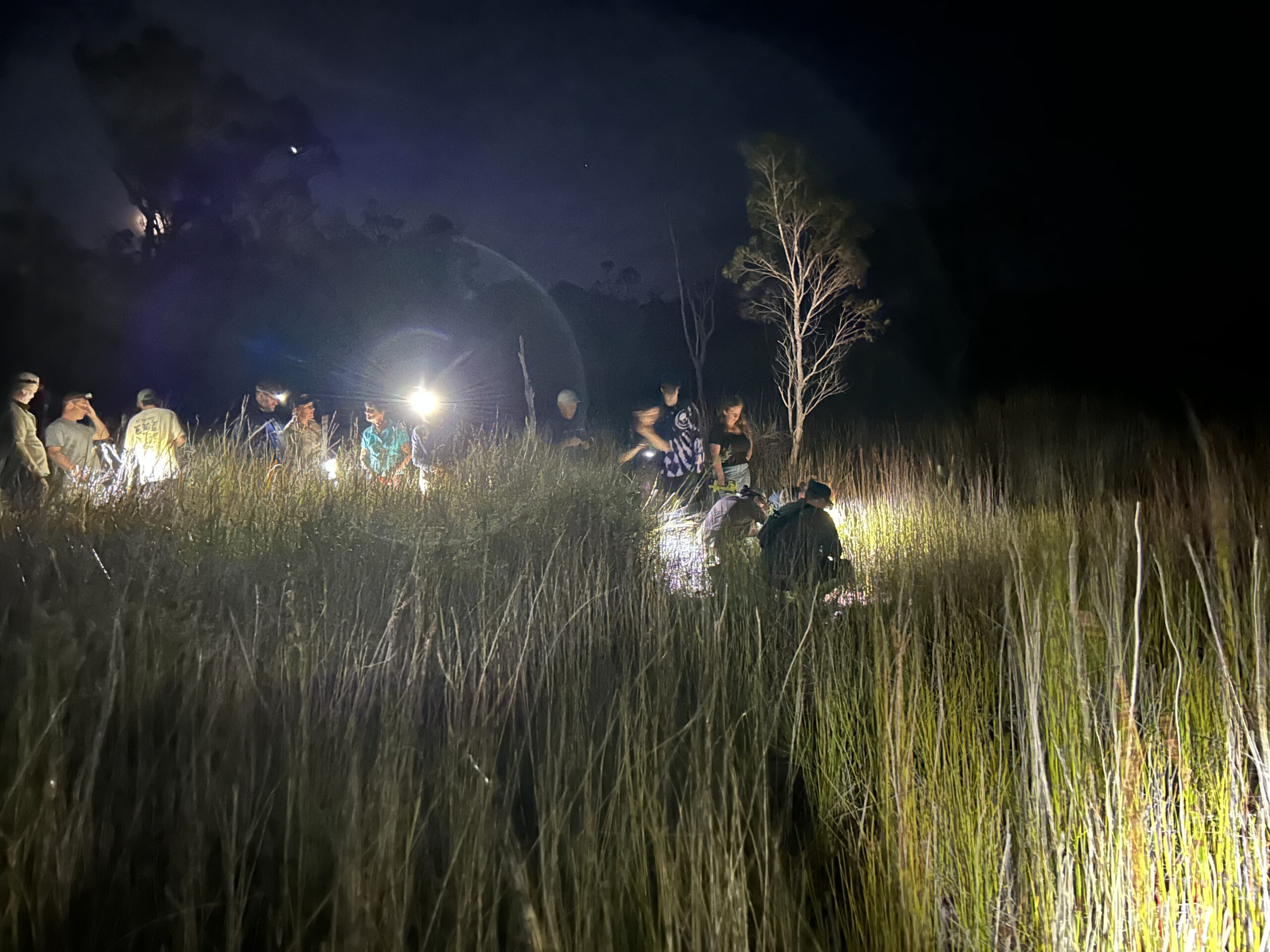
How You Can Help This February
Here are some simple ways to support your local frogs right now:
🐸 How to Submit Your Observations
You can share your frog sightings in three ways:
FFF Record Sheet
Download at https://mrccc.org.au/frog-in-february/
Email completed sheets, photos and/or call recordings to findafrog@mrccc.org.au for identification and entry into the Queensland WildNet database.
iNaturalist
Join the Find a Frog in February project and upload your photos and recordings.
FrogID App
Join the Find a Frog in Feb – Mary River Catchment Coordination Committee group to submit call recordings.
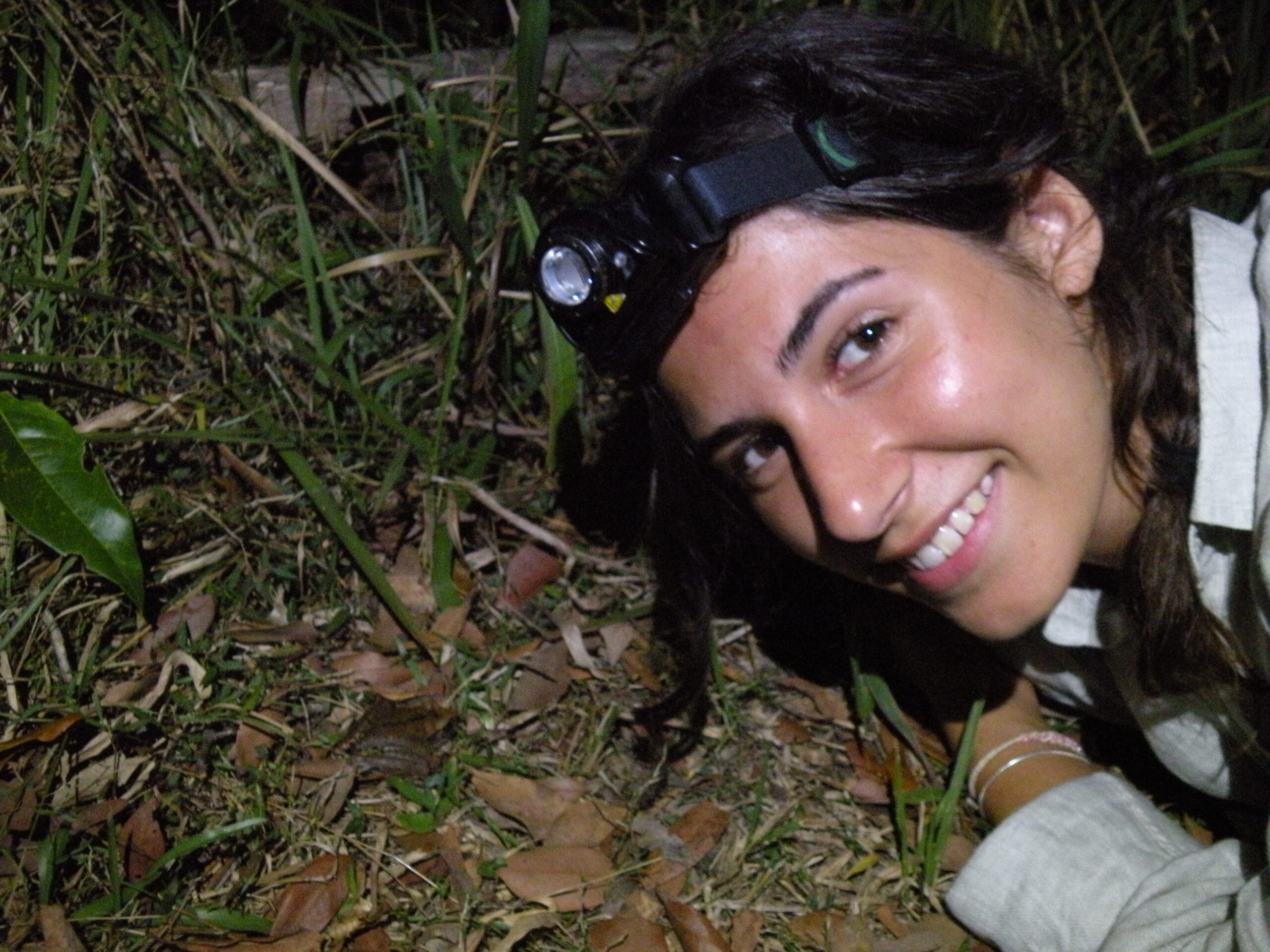
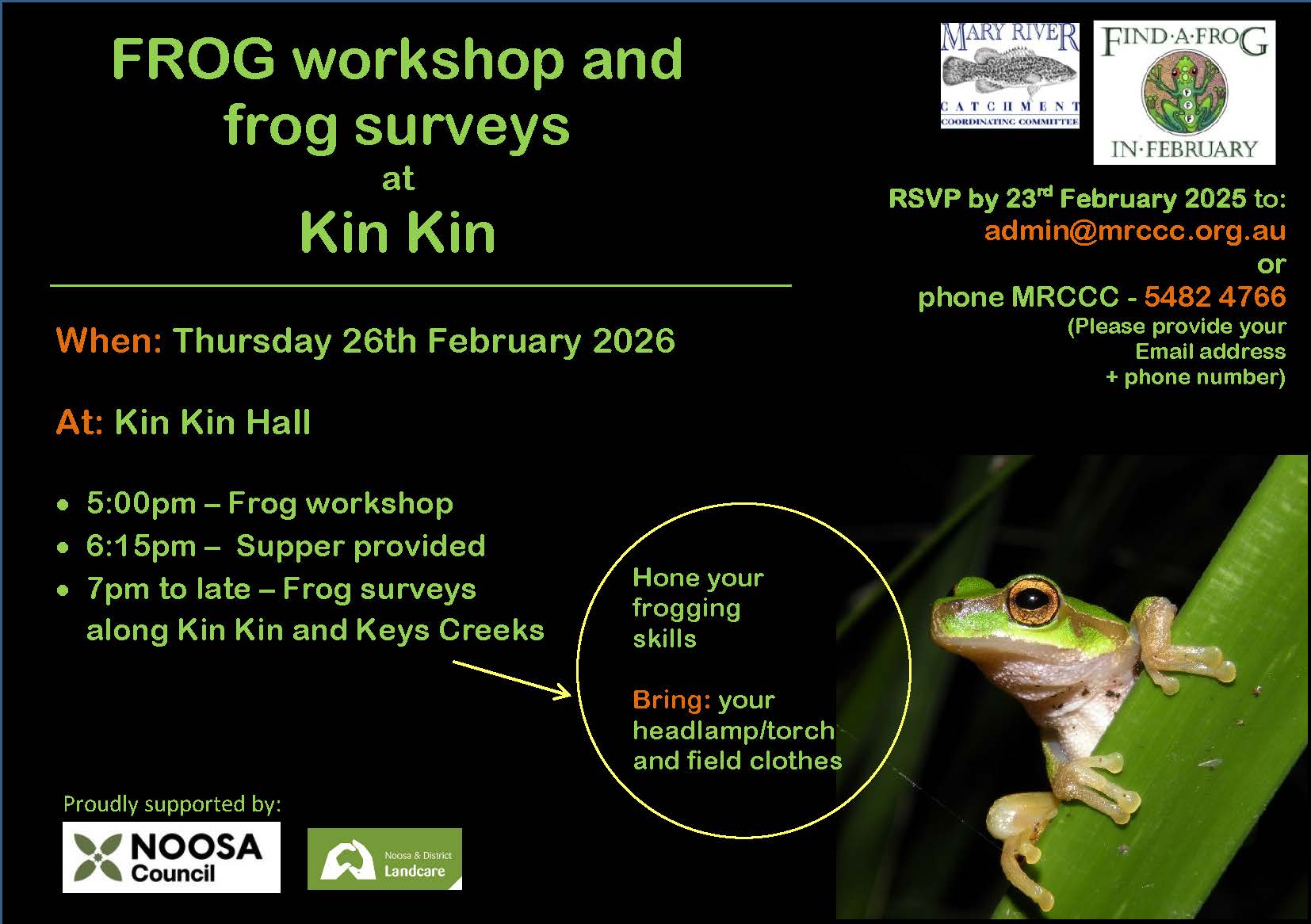
HAPPY FROGGING from the Find a Frog in February Team – we look forward to hearing from you!
Find a Frog in February is proudly supported by the Sunshine Coast Council, Noosa Shire Council, Gympie Regional Council and the Fraser Coast Council, and delivered by the Mary River Catchment Coordinating Committee.
For more information visit http://mrccc.org.au/frog-in-february/